


Dog diarrhea is a common health issue affecting dogs. While it is often mild and resolves on its own, it can sometimes be a sign of a serious underlying condition that requires prompt veterinary care.
In this article, you’ll learn about the common causes of diarrhea in dogs, treatments, how to prevent it, and when you should consult a veterinarian.
What causes dog diarrhea?
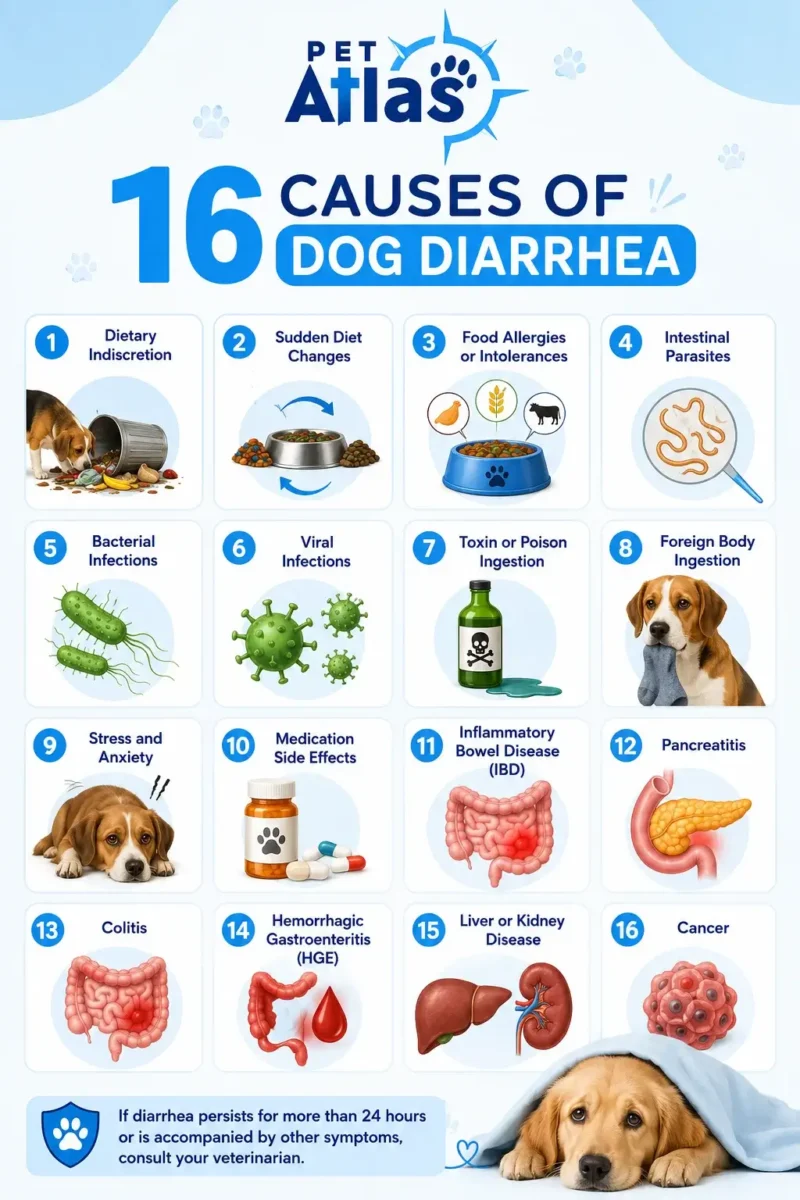
Dog diarrheais not a disease itself but a symptom of an underlying issue. The most common causes include:
Dietary Indiscretion
Dogs are naturally curious and often eat things they shouldn’t, such as garbage, spoiled food, table scraps, or other inappropriate items. This dietary indiscretion is one of the leading causes of acute diarrhea.
Sudden Diet Changes
Switching your dog’s food too quickly can disrupt the balance of the digestive system, leading to gastrointestinal (GI) upset and loose stools
Food Allergies or Intolerances
While food allergies commonly cause skin problems, they may also trigger chronic diarrhea and digestive discomfort.
Intestinal Parasites
Parasitic infections are a common cause of diarrhea, particularly in puppies. Common intestinal parasites include:
- Giardia
- Coccidia
- Roundworms
- Hookworms
- Whipworms
Bacterial Infections
Several bacteria can infect the gastrointestinal tract and cause diarrhea, including:
- Salmonella
- Campylobacter
- Escherichia coli (E. coli)
Viral Infections
Certain viral diseases can cause severe diarrhea, particularly in young or unvaccinated dogs. These include:
- Canine parvovirus
- Canine distemper virus
- Canine coronavirus
Toxin or Poison Ingestion
Dogs may develop diarrhea after consuming toxic food or substances such as:
- Chocolate
- Alcohol
- Certain essential oils
- Household chemicals
- Toxic plants
- Human medications
Foreign Body Ingestion
Swallowing foreign objects, such as toys, and bones can irritate or block the digestive tract, leading to serious complications and diarrhea.
Stress and Anxiety
Stressful situations can temporarily affect a dog’s digestive system. Common triggers include:
- Veterinary visits
- Boarding or travel
- Moving to a new home
- Adopting another pet
- Loud noises or major routine changes
Medication Side Effects
Certain medications, particularly antibiotics, can disrupt the normal balance of intestinal bacteria and cause diarrhea.
Inflammatory Bowel Disease (IBD)
Inflammatory bowel disease is a chronic condition in which persistent inflammation affects the digestive tract. Dogs with IBD often experience recurring diarrhea, vomiting, weight loss, and reduced appetite.
Pancreatitis
Inflammation of the pancreas interferes with normal digestion and commonly causes diarrhea, vomiting, abdominal pain, and decreased appetite.
Colitis
Colitis refers to inflammation of the large intestine and often causes frequent diarrhea, mucus in the stool, straining during bowel movements, and sometimes fresh blood in the feces.
Hemorrhagic Gastroenteritis (HGE)
Hemorrhagic gastroenteritis is a serious condition characterized by sudden, severe dog diarrhea with blood, often accompanied by vomiting and dehydration. It requires immediate veterinary treatment.
Liver or Kidney Disease
Diseases affecting the liver or kidneys can interfere with normal digestion and toxin removal, contributing to diarrhea and other gastrointestinal symptoms.
Cancer
Tumors involving the digestive tract or other organs may cause chronic diarrhea, weight loss, decreased appetite, and other systemic signs. Gastrointestinal cancers are more common in older dogs.
When Should You Contact the Vet forDog Diarrhea?
If your dog shows any of the following signs, seek veterinary attention without delay
- Blood in the stool.
- black and tarry stools.
- Persistent vomiting.
- Diarrhea lasting more than 48 hours.
- Frequent or severe diarrhea.
- Lethargy or unusual weakness.
- Loss of appetite.
- Abdominal pain or signs of discomfort.
- Fever.
- Signs of dehydration.
- Excessive drooling.
Don’t ignore persistent diarrhea; it could be a sign of a serious underlying health condition.
Treatment for Dog Diarrhea
Treatment depends on the underlying cause of diarrhea. Your veterinarian may recommend diarrhea medicine for dogs such as:
- Prescription medications, such as anti-diarrheal drugs, anti-nausea medications, antibiotics, or dewormers.
- Probiotics or a prescription gastrointestinal diet to support digestive health.
- Fluid therapy for dogs with dehydration or severe diarrhea.
- Specialized treatment for underlying conditions, such as parasites, pancreatitis, or other diseases.
For mild cases, your vet may recommend a temporary bland diet, such as boiled chicken and white rice, before gradually returning to your dog’s regular food.
How to Prevent Dog Diarrhea
Reduce your dog’s risk of diarrhea by:
- Keeping vaccinations up to date.
- Transitioning to new food gradually.
- Feeding a consistent, balanced diet.
- Preventing access to garbage, spoiled food, and toxic substances.
- Using year-round parasite prevention, including flea, tick, and heartworm protection.
- Scheduling regular veterinary checkups and annual fecal exams to detect intestinal parasites early.
Conclusion
According to a large-scale 2025 VetCompass study published in PLOS One, approximately 1 in every 12 dogs (8.18%) experiences acute diarrhea requiring veterinary care each year. While dog diarrhea is often mild and short-lived, it should never be ignored, as it may be an early warning sign of a serious underlying condition.