


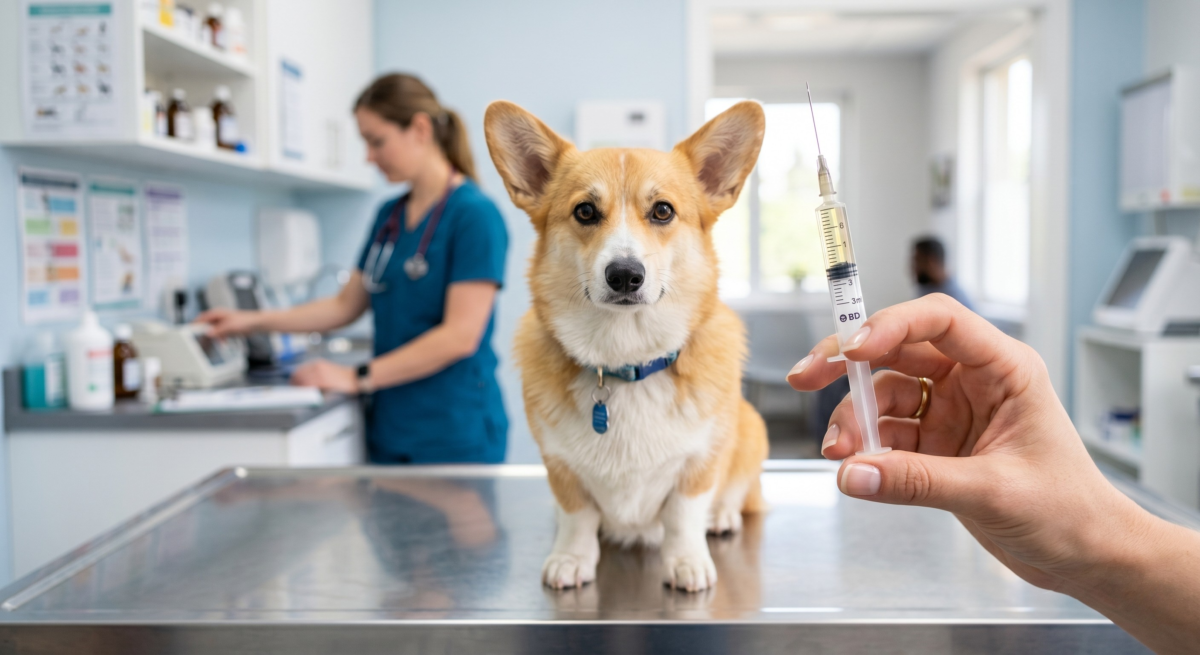
Vaccines are your pet’s first line of defense against life-threatening and zoonotic diseases — skipping them puts your pet and your family at risk.
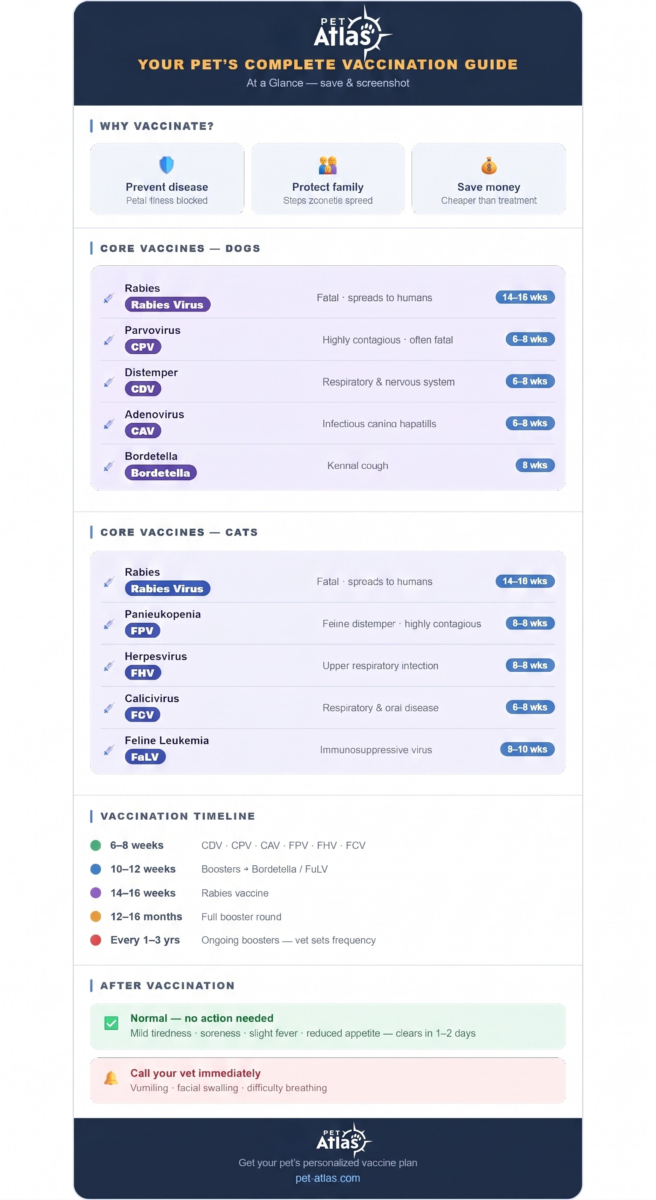
Why Pet Vaccinations Matter
- Prevent fatal diseases like rabies and parvovirus before they ever take hold
- Stop zoonotic diseases from jumping from your pet to your family
- Cost a fraction of what treating a seriously ill pet will set you back
Core Vaccines for Dogs 🐶
| Vaccine | Protects Against | First Dose | Booster |
| Rabies | Fatal virus — spreads to humans | 14–16 weeks | Every 1–3 years |
| Canine Parvovirus (CPV) | Highly contagious, often fatal | 6–8 weeks | Annually |
| Canine Distemper Virus (CDV) | Attacks respiratory & nervous system | 6–8 weeks | Every 3 years |
| Canine Adenovirus (CAV) | Infectious canine hepatitis | 6–8 weeks | Every 3 years |
| Bordetella | Kennel cough | 8 weeks | Annually |
Core Vaccines for Cats 🐱
| Vaccine | Protects Against | First Dose | Booster |
| Rabies | Fatal virus — spreads to humans | 14–16 weeks | Every 1–3 years |
| Feline Panleukopenia Virus (FPV) | Feline distemper — highly contagious | 6–8 weeks | Every 3 years |
| Feline Herpesvirus (FHV) | Upper respiratory infection | 6–8 weeks | Annually |
| Feline Calicivirus (FCV) | Upper respiratory & oral disease | 6–8 weeks | Annually |
| Feline Leukemia Virus (FeLV) | Immunosuppressive virus | 8–10 weeks | Annually |
Pet Vaccination Schedule — At a Glance

| Age | What Happens |
| 6–8 weeks | First vaccines: Distemper, Parvovirus, Herpesvirus |
| 10–12 weeks | Boosters + Bordetella / Feline Leukemia |
| 14–16 weeks | Rabies vaccine |
| 12–16 months | Full booster round |
| Every 1–3 years | Ongoing boosters — vet determines frequency |
What to Watch After Vaccination
- Mild tiredness or soreness at the injection site: normal for 1–2 days
- Slight fever or reduced appetite: normal and short-lived
- Vomiting, swelling, or difficulty breathing: call your vet immediately
FAQ:
Do indoor pets really need vaccines?
Yes — rabies and respiratory infections can still reach indoor pets through open windows, other animals, or even on your clothing.
What if my pet misses a scheduled vaccine?
Contact your vet to reschedule as soon as possible — some vaccines require restarting the full course if delayed too long.
How often do booster shots need to be given?
Depends on the vaccine — some are annual, others every 3 years. Your vet will set the right schedule based on your pet’s age and lifestyle.
Conclusion
Staying on top of your pet’s vaccination schedule isn’t a one-time task — it’s an ongoing commitment that directly shapes how long and how well they live. Core pet vaccinations are the single most effective tool you have against diseases that are entirely preventable.
Whether you have a puppy starting their first course or a senior cat due for a booster shot, the right dog or cat vaccination schedule makes all the difference. When in doubt, your vet is always the best starting point — and with Pet Atlas, that conversation is just a few clicks away.