


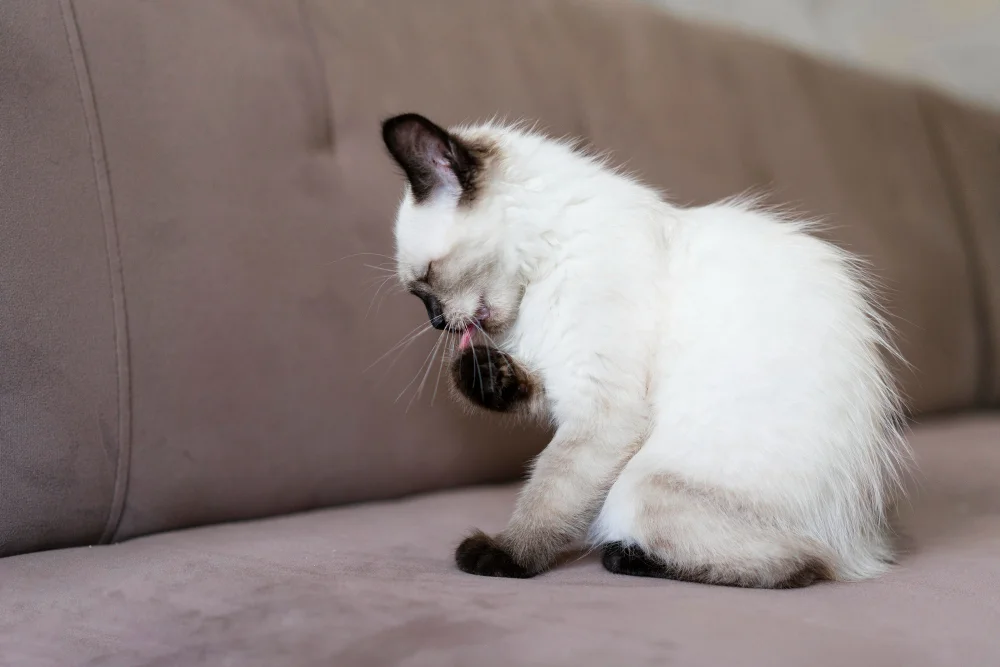
Cat allergies are a common condition that can cause skin, digestive, or respiratory problems. Because many allergy symptoms are similar to those of other health conditions, identifying the underlying cause is essential.
In this article, you’ll learn the common causes, symptoms, and treatment options.
Symptoms of Cat Allergies
The signs of cat allergies can vary depending on the cause, but they usually affect the skin, respiratory system, or digestive system.
Skin Symptoms
Skin problems are the most common sign of cat allergies and may include:
- Constant scratching, licking, or overgrooming.
- Hair loss or thinning fur.
- Red, irritated, or inflamed skin.
- Rashes, scabs, crusts, or small bumps.
- Hives or swollen areas on the skin.
- Recurring skin or ear infections.
Respiratory Symptoms
Environmental allergens can irritate your cat’s airways and cause symptoms such as:
- Frequent sneezing.
- Runny nose or watery eyes.
- Coughing or wheezing.
- Difficulty breathing, especially in cats with allergic asthma.
Important: If your cat is breathing with an open mouth or appears to be struggling to breathe, this is a medical emergency.
Digestive Symptoms
Food allergies may affect your cat’s digestive system and cause:
- Vomiting.
- Diarrhea.
- Loss of appetite.
- Weight loss.
- Excessive gas or stomach discomfort.
Severe Allergic Reactions
Although rare, some cats can develop a serious allergic reaction , which may cause:
- Swelling of the face, lips, nose, or around the eyes.
- Sudden vomiting or diarrhea.
- Severe difficulty breathing.
- Weakness or collapse.
What Are Cats Allergic To?
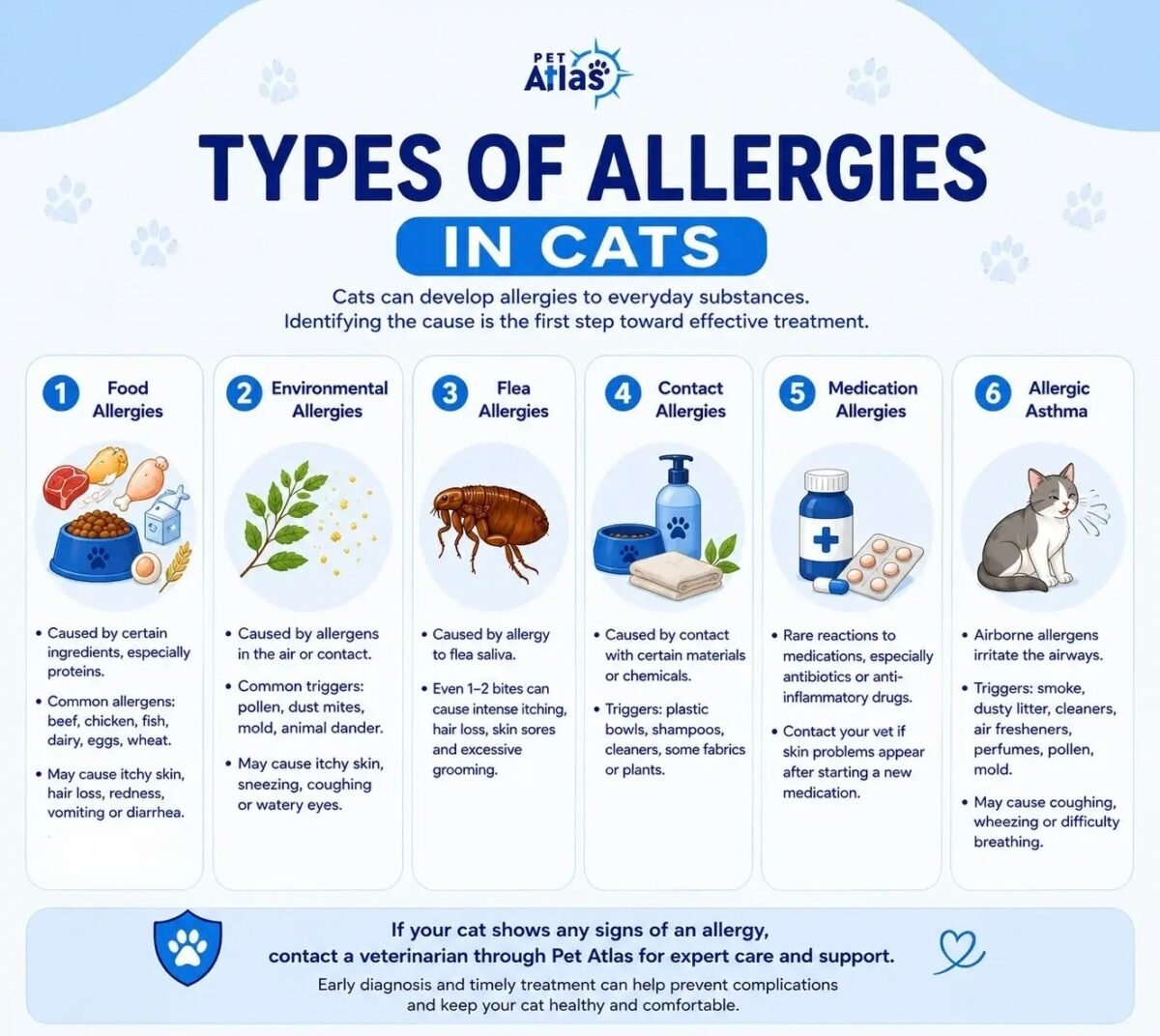
Cats can develop allergies to a range of everyday substances, such as:
Food Allergies
Food allergies happen when a cat’s immune system reacts to a specific ingredient in its diet. Protein sources are the most common cause.
Common food allergens include:
- Beef
- Chicken
- Fish
- Dairy products
- Eggs
- Wheat
Some cats may also react to food additives, preservatives, or grains, although this is less common. Food allergies usually cause hair loss, itchy skin, and redness. Some cats may also develop diarrhea or vomiting.
Read: Toxic Foods for Cats.
Environmental Allergies
Environmental allergies are caused by substances your cat breathes in or comes into contact with.
Common triggers include:
- Pollen
- Dust and dust mites
- Mold
- Animal dander
These allergies often lead to itchy skin, but some cats may also sneeze, cough, or have watery eyes.
Flea Allergies
Some cats are allergic to flea saliva rather than the flea itself. Even one or two flea bites can cause intense itching, excessive grooming, hair loss, and skin sores.
Contact Allergies
Although uncommon, some cats develop skin irritation after touching certain materials or chemicals, such as:
- Plastic food bowls
- Shampoos or topical medications
- Cleaning products
- Certain fabrics or plants
Medication Allergies
In rare cases, cats can have an allergic reaction to medications, especially antibiotics or anti-inflammatory drugs. If skin problems appear after starting a new medication, contact your veterinarian.
Allergic Asthma
Some airborne allergens can irritate a cat’s airways and trigger asthma symptoms.
Common triggers include:
- Cigarette smoke
- Dusty cat litter
- Household cleaners
- Air fresheners
- Perfumes
- Pollen and mold
Affected cats may cough, wheeze, or have difficulty breathing.
Treatment of Cat Allergies
Treating cat allergies starts with an accurate veterinary diagnosis, as different types of allergies often cause similar symptoms.
A consultation through Pet-Atlas helps identify the underlying cause, allowing your veterinarian to recommend the most effective treatment for your cat.
Treatment may include:
- Use a veterinarian-recommended flea prevention product all year round.
- Switch to a cat food for allergies recommended by your veterinarian.
- Avoid treats, table scraps, and any foods that may trigger an allergic reaction.
- Reduce your cat’s exposure to common allergens whenever possible.
- Your veterinarian may prescribe medications to relieve itching, inflammation, and other allergy symptoms.
Conclusion
Studies show that food allergies account for only about 10% of cat allergies, while flea and environmental allergies are far more common. Since many allergies share similar symptoms, professional diagnosis is the key to effective treatment.
If your cat is showing signs of allergies, book a consultation with Pet Atlas to identify the exact cause and get the right treatment to restore your cat’s comfort and well-being.