

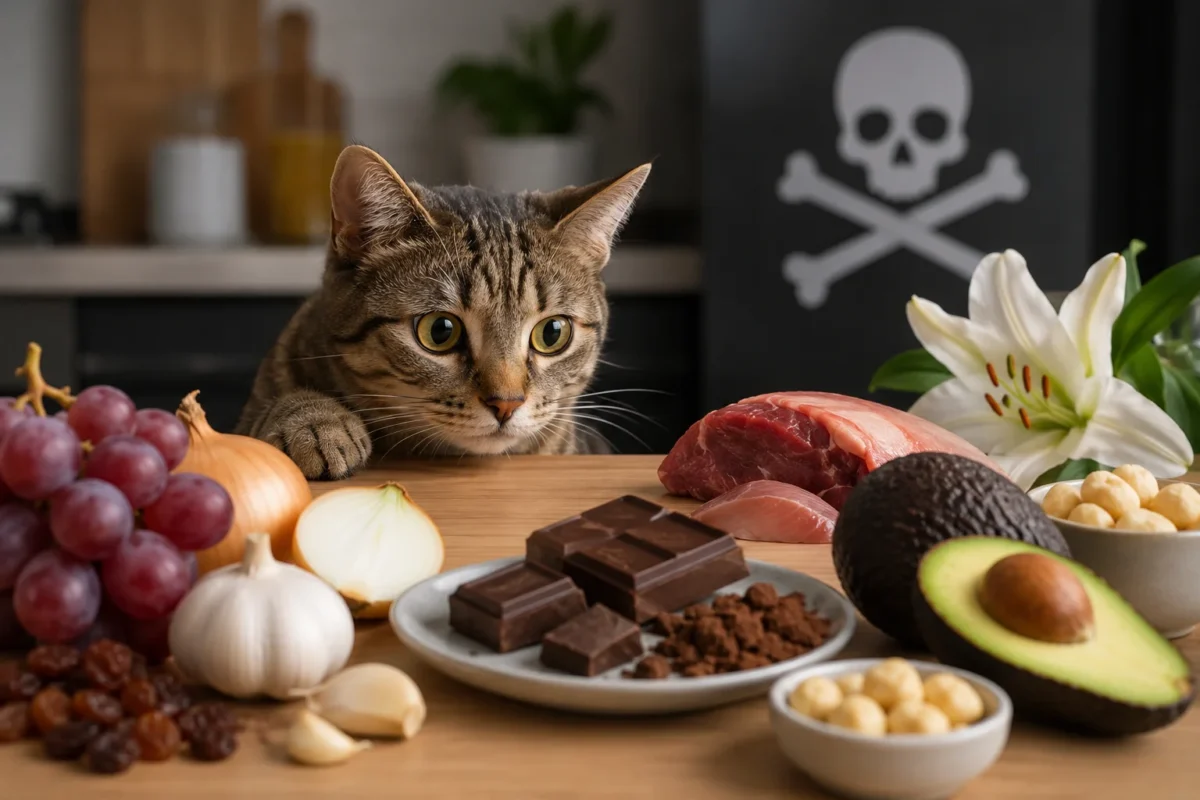
You should always be aware of toxic foods for cats. Many human foods that seem harmless can actually harm or even be fatal to your pet. Knowing what cats should not eat is essential for keeping them safe and healthy.
Continue reading this article to discover the most dangerous foods for cats.
What are toxic foods for cats?
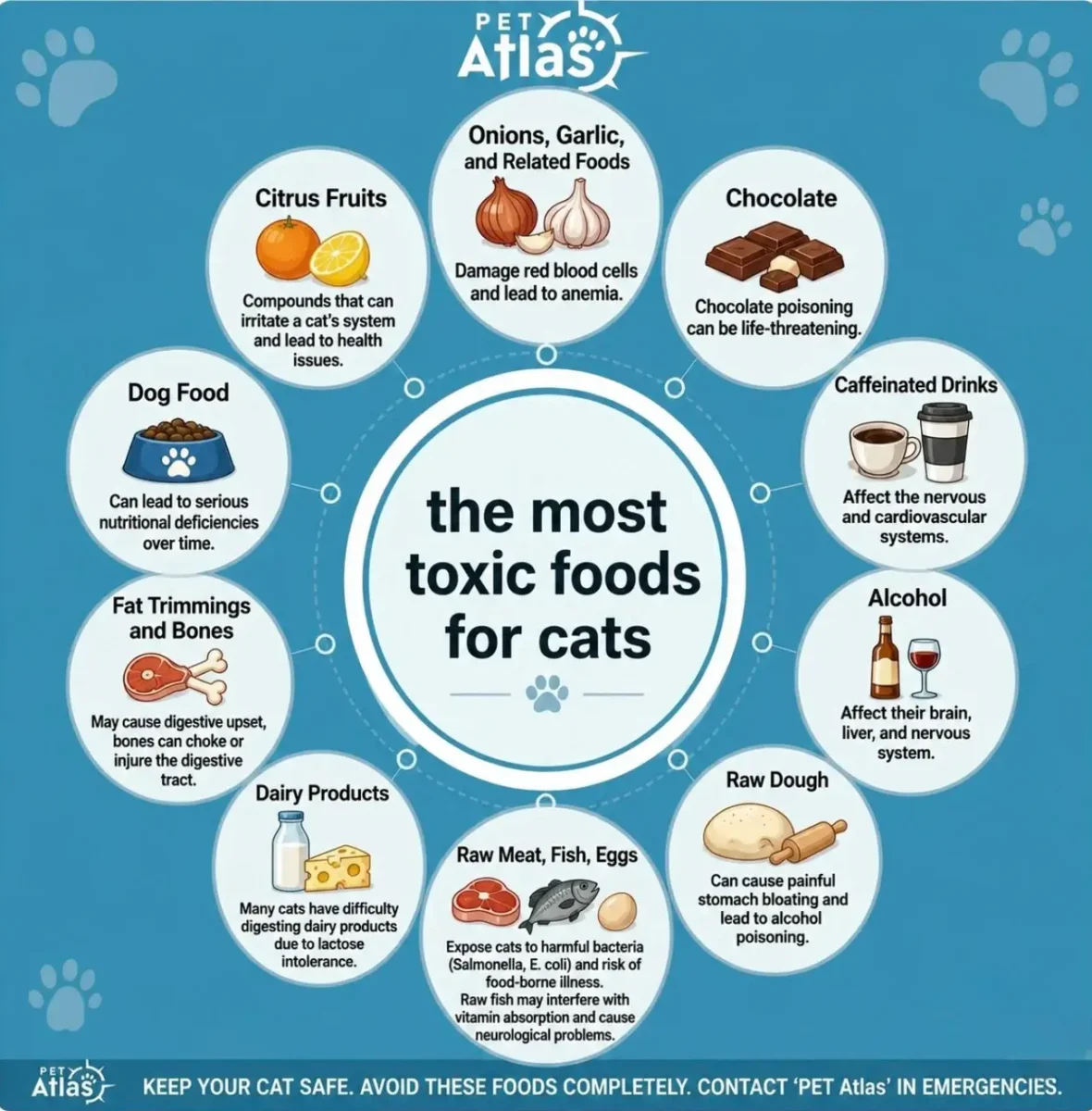
Many human foods are commonly considered harmless, but in reality, some of them can be among the most dangerous and toxic foods for cats.
Onions, Garlic, and Related Foods
Garlic,onions, chives, leeks, and shallots are toxic to cats because they can damage red blood cells and lead to anemia.
Toxicity may occur from fresh, cooked, dried, or powdered forms, and even small amounts consumed regularly can be harmful.
Common symptoms include:
- Vomiting
- Weakness and lethargy
- Loss of appetite
- Pale or yellow gums
- Rapid breathing
- Increased heart rate
- Dark-colored urine
- Diarrhea
- Collapse in severe cases
Chocolate
Chocolate is one of the most toxic foods for cats because it contains theobromine and caffeine, substances known as methylxanthines.
Dark chocolate and baking chocolate are especially dangerous due to their higher concentrations of these compounds. In severe cases, chocolate poisoning can be life-threatening.
Common symptoms include:
- Vomiting
- Diarrhea
- Increased thirst and urination
- Hyperactivity or restlessness
- Muscle tremors
- Difficulty walking
- Abnormal heart rhythm
- Seizures
Caffeinated Drinks
Drinks containing caffeine are dangerous for cats because they contain methylxanthines, stimulants that can affect the nervous and cardiovascular systems.
Sources of caffeine include coffee, tea, energy drinks, cola beverages, and some medications. In severe cases, caffeine poisoning can be fatal.
Common symptoms include:
- Vomiting
- Diarrhea
- Restlessness or hyperactivity
- Rapid breathing
- Heart palpitations or irregular heart rhythm
- Muscle tremors
- Seizures
Alcohol
Alcohol is highly toxic to cats and can quickly affect their brain, liver, and nervous system. Even small amounts can cause serious health problems due to a cat’s small size.
Common symptoms include:
- Vomiting and diarrhea
- Excessive drooling
- Increased thirst and urination
- Weakness and lethargy
- Loss of coordination (unsteadiness)
- Disorientation
- Slow breathing
- Muscle tremors
- Seizures
- Low body temperature
- Coma in severe cases
Read: Toxic food for dogs.
Raw Dough
Raw dough can be among toxic foods for cats because the yeast continues to ferment inside the stomach, producing gas and alcohol. This can cause painful stomach bloating and lead to alcohol poisoning.
Common symptoms include:
- Bloated or swollen abdomen
- Abdominal pain
- Vomiting
- Diarrhea
- Weakness and lethargy
- Disorientation
- Slow breathing
- Seizures in severe cases
Grapes, Raisins, Tamarinds, and Cream of Tartar
These types are among the most dangerous and toxic foods for cats. lead to acute kidney failure, even when consumed in small amounts.
Common symptoms include:
- Vomiting
- Diarrhea
- Loss of appetite
- Lethargy
- Abdominal pain
- Increased thirst
- Increased or decreased urination
- Little or no urine production in severe cases
Raw Meat, Fish, Eggs, and Dairy Products
Raw meat, fish, and eggs can expose cats to harmful bacteria such as Salmonella and E. coli, increasing the risk of food-borne illness.
Raw fish may also interfere with essential vitamin absorption, potentially leading to neurological problems.
Additionally, many cats have difficulty digesting dairy products due to lactose intolerance.
Common symptoms include:
- Vomiting
- Diarrhea
- Loss of appetite
- Lethargy
- Abdominal pain
- Fever
- Skin and coat problems
- Tremors or seizures in severe cases
To reduce health risks, it is generally safer to feed cats properly cooked foods and cat-specific diets recommended by a veterinarian in Pe.
Fat Trimmings and Bones
Table scraps One of the common nutritional mistakes of cats. Fat, whether cooked or raw, may cause digestive upset, while bones can create choking hazards or injure the digestive tract.
Common symptoms include:
- Vomiting
- Diarrhea
- Abdominal discomfort
- Choking or difficulty swallowing
- Constipation or intestinal blockage
- Bleeding or pain from digestive tract injuries
Dog Food
Dog food is not toxic to cats, but it is not suitable as a long-term diet. Cats have different nutritional needs and require higher levels of specific nutrients such as protein, taurine, vitamin A, and arachidonic acid, which are present in much lower amounts in dog food.
While an occasional bite is harmless, a diet based on dog food can lead to serious nutritional deficiencies over time.
Potential health issues include:
- Poor growth and weakness
- Heart disease (due to taurine deficiency)
- Vision problems
- Dental and skin issues
- Overall malnutrition
Citrus Fruits
Oranges, lemons, limes, and other citrus fruits are generally not toxic to cats when it comes to the flesh. However, the peels and skins contain essential oils and compounds that can irritate a cat’s system and lead to health issues.
Possible reactions include:
- Vomiting
- Diarrhea
- Lethargy or low mood (depression)
- Skin irritation or discomfort
What should I do if my cat eats toxic food?
In this situation, you should immediately contact a veterinarian, as early treatment significantly improves the chances of recovery. Avoid trying to treat your cat on your own.
conclusion
According to the ASPCA Animal Poison Control Center, thousands of pet poisoning cases are reported each year, with common human foods being a leading cause, including many toxic foods for cats. Awareness of these risks can greatly reduce accidental poisoning and help protect your cat’s health and safety.