

With so many options available, choosing between wet or dry cat food can be challenging. The best choice depends on your cat’s health, and nutritional needs.
In this article, we’ll compare the benefits of both types to help you decide which one is best for your cat.
Wet food for cats
To make the right choice between wet or dry cat food, it is important to first understand the advantages and disadvantages of wet cat food.
Advantages of wet cat food
Although cats do not strictly require wet food, adding it to their diet can offer several valuable health benefits.
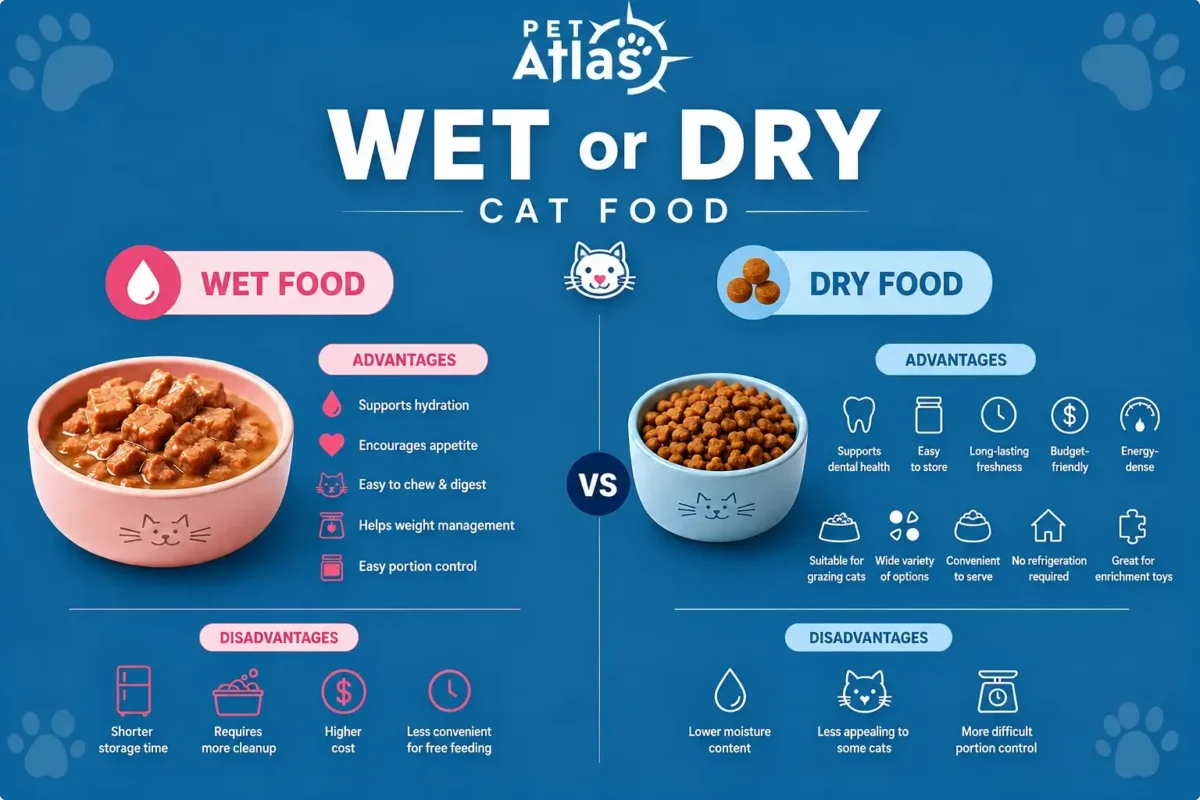
- Supports hydration: Its high moisture content helps cats stay hydrated and promotes urinary tract health.
- Encourages better appetite: Warming wet food slightly can enhance its aroma, making it more appealing to picky eaters or cats recovering from illness.
- Easy to chew and digest: The soft texture makes it an excellent option for kittens, senior cats, and cats with dental or oral problems.
- Helps with weight management: Larger serving volumes can promote a feeling of fullness, which may help reduce overeating.
- Simplifies portion control: Single-serve cans and pouches make it easy to provide the correct amount of food at each meal and monitor calorie intake.
Disadvantages of Wet Cat Food
However, despite its many benefits, wet cat food also has some drawbacks that should be taken into consideration before making a feeding decision.
- Shorter storage time: Opened containers need refrigeration and should be used within a short period.
- Requires more cleanup: Leftovers can spoil quickly and may create odors if not removed promptly.
- Higher cost: Usually more expensive per serving than dry cat food.
- Less convenient for free feeding: Cannot be left out for long periods because it may lose freshness and attract bacteria.
Knowing the disadvantages can help you avoid common nutrition mistakes and protect your cat’s health.
Dry food for cats
We will also explore the advantages and disadvantages of dry cat food to help you make an informed decision when comparing wet or dry cat food.
Advantages of Dry Cat Food
Dry cat food is a convenient and nutritionally balanced option for many cats. It offers several advantages that can support both your cat’s health and your daily feeding routine:
- Supports dental health: The crunchy texture encourages chewing and may help keep teeth cleaner.
- Easy to store: Its long shelf life allows it to stay fresh for longer after opening.
- Suitable for grazing cats: Ideal for cats that prefer eating small meals throughout the day.
- Long-lasting freshness: Remains fresh longer than wet food and is often more economical per serving.
- Wide variety of options: Available in many shapes, sizes, and textures to suit different feline preferences.
- Convenient to serve: Easy to measure and leave out for cats that enjoy free feeding.
- No refrigeration required: Can be stored at room temperature after opening.
- Budget-friendly: Generally costs less per serving than wet food.
- Energy-dense: Contains less moisture, providing more calories in a smaller portion.
- Encourages activity: Can be used as treats during training or scattered around the house to promote exercise and play.
- Compatible with enrichment toys: Works well in food-dispensing toys that provide mental stimulation.
Disadvantages of Dry Cat Food
However, these benefits do not mean that dry cat food is without drawbacks. There are also some disadvantages:
- Lower moisture content: May not provide enough hydration on its own, especially for cats that drink little water.
- Less appealing to some cats: Picky eaters may prefer the aroma and texture of wet food.
- More difficult portion control: Free feeding can make it easier to overfeed and monitor calorie intake less accurately.
Which is better: wet or dry cat food?
According to the World Small Animal Veterinary Association (WSAVA) guidelines, neither wet food nor dry food can be considered the best option for all cats.
Therefore, it is always recommended to consult a veterinarian to choose the most suitable diet based on your cat’s health, activity level, and specific needs.
Don’t let uncertainty stand in the way of your cat’s health.
conclusion
Choosing the best diet for your cat is not always straightforward. That is why consulting a veterinarian is essential. A veterinarian has the knowledge and expertise to determine whether wet or dry cat food is the better option.
At Pet-Atlas, we provide veterinary consultation services to help you make the best decisions for your pet’s health.