


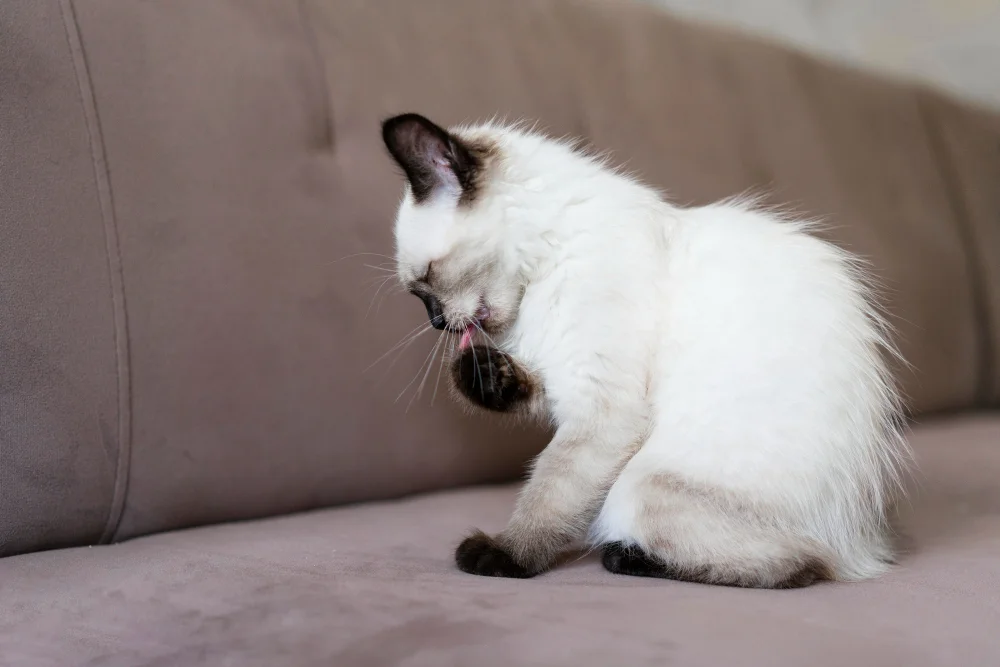
Could cat vomiting be a health problem or simply a minor symptom? You may be wondering, “Why is my cat vomiting, and does it require a veterinary visit?” In this article, we’ll answer your most common questions about cat vomiting and explain what you can do to help your cat.
You can also access professional veterinary advice from your home through Pet-Atlas, helping you understand your cat’s condition and choose the right care.
Causes of Cat Vomiting
If you’re wondering why my cat is vomiting? There are several possible causes. Common causes include:
- Sudden diet changes, food intolerance, or eating too quickly.
- Eating something inappropriate or toxic, such as certain plants, household products, or human foods.
- Swallowing foreign objects, especially strings or small objects that can cause intestinal blockage.
- Parasites and infections, including bacterial and viral infections.
- Digestive problems, such as gastritis, inflammatory bowel disease (IBD), or constipation.
- Organ diseases, including kidney, liver, or pancreatic disease.
- Hormonal disorders, such as hyperthyroidism or diabetes.
- Certain medications, including some antibiotics and anti-inflammatory drugs.
- Cancer, in some cases.
- Heartworm disease and other less common conditions.
Acute vs. Chronic Vomiting in Cats
Cat vomiting can be acute or chronic, and understanding the difference can help determine how quickly veterinary care is needed.
Acute Vomiting
Acute vomiting starts suddenly and may be caused by eating something toxic, intestinal parasites, or other short-term problems. It often stops once the underlying cause is treated.
If your cat vomits once or a few times but is still eating, comfortable, and acting normally, it may not require emergency care. However, veterinary consultation is recommended if the vomiting continues.
Chronic Vomiting
Chronic vomiting happens repeatedly over a longer period, ranging from several weeks to months. It may occur monthly or even daily and is often linked to an underlying condition, such as:
- Inflammatory bowel disease (IBD)
- Kidney disease
- Hyperthyroidism
- Cancer
- Other digestive or systemic diseases
What Your Cat’s Vomit Appearance Means
The color and texture of your cat’s vomit offer key clues about their health. A vital detail for pet parents navigating the UAE’s warm climate, where dehydration can escalate quickly.
Yellow vomit
Cat vomiting white foam usually contains bile and may occur when the stomach is empty. It can also be associated with digestive or liver problems.
Clear liquid
May be stomach fluid and can occur when the stomach is empty. It may also be associated with mild acid reflux, sometimes triggered by changes in routine or air conditioning sensitivity in UAE .
White foam
Cat vomiting white foam often occurs when the stomach or upper digestive tract is irritated, or when the stomach is empty.
Blood
May appear as fresh red blood or dark material resembling coffee grounds. It can result from irritation, ulcers, or bleeding in the digestive tract and requires veterinary attention.
Undigested food
May occur when a cat eats too quickly or when food remains in the stomach due to digestive irritation, food intolerance, or an obstruction.
Hairballs
Occasional hairball vomiting can be normal, especially in long-haired cats or cats that groom frequently. Frequent hairballs, however, may warrant a veterinary check.
Worms
Visible worms in cats, especially roundworms, can appear in vomit and should be evaluated by a veterinarian.
Green vomit
May contain bile mixed with food or other stomach contents. The color alone does not identify the cause.
Black or coffee-ground-like vomit
Can indicate digested blood and should be evaluated by a veterinarian.
Brown, foul-smelling vomit
May be related to digested blood or something the cat has eaten.
Cat Vomiting Symptoms to Look Out For
Watch for these symptoms alongside vomiting:
- Loss of appetite or increased thirst
- Diarrhea or constipation
- Lethargy, weakness, or unusual behavior
- Weight loss
- Abdominal pain
- Blood in vomit
- Frequent or repeated vomiting
- Changes in diet or bathroom habits
- Sneezing or other respiratory symptoms
- Possible exposure to toxins, plants, medications, or harmful foods
- Other pets showing similar symptoms
Tip: Note how often your cat vomits, what the vomit looks like, and any changes in eating, drinking, stool, or behavior. This can help your veterinarian identify the cause.
When to Worry About Cat Vomiting
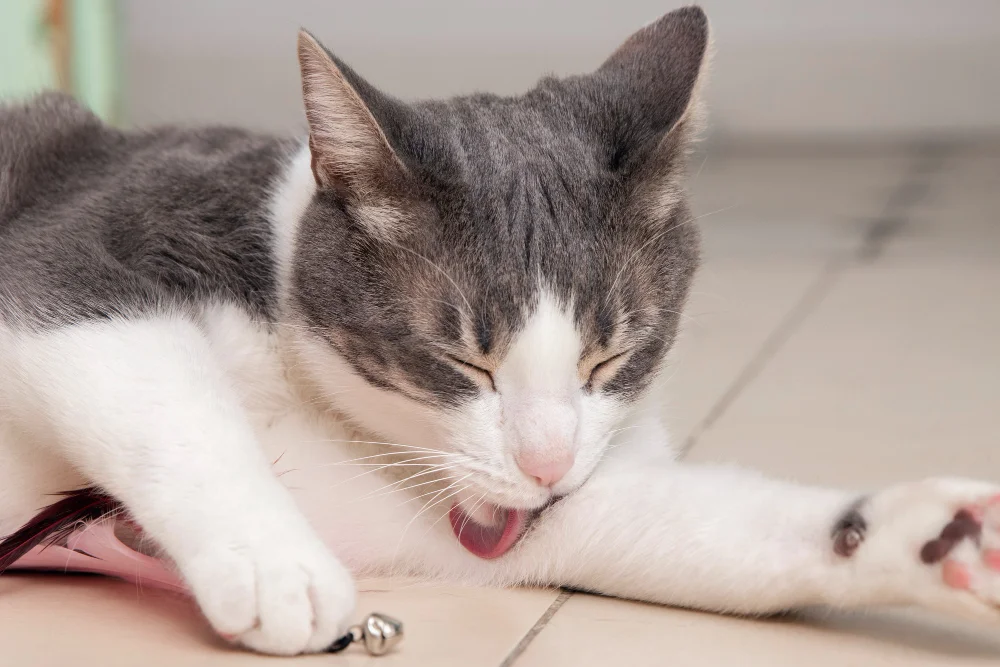
Occasional vomiting can happen, but frequent or severe vomiting may indicate an underlying health problem. Contact your veterinarian if:
- Your cat vomits more than 2–3 times in a row.
- Your cat cannot keep food or water down.
- Vomiting is accompanied by loss of appetite, diarrhea, lethargy, increased thirst, or weight loss.
- Your cat has a chronic condition.
- You notice worms or blood in the vomit.
- Your cat is a kitten or senior, as they can become dehydrated more quickly.
Don’t ignore repeated vomiting.
Understand the cause and ensure your cat receives the right care.
Conclusion
Vomiting in cats can have many causes, from simple digestive upset to underlying health conditions. In fact, a study of more than 1 million cats found that around 2% had chronic vomiting and/or diarrhea, with chronic vomiting being the most common presentation.
So, if your cat vomits repeatedly or develops other symptoms, don’t ignore it. Early veterinary assessment can help identify the cause and ensure your cat receives the right care.