


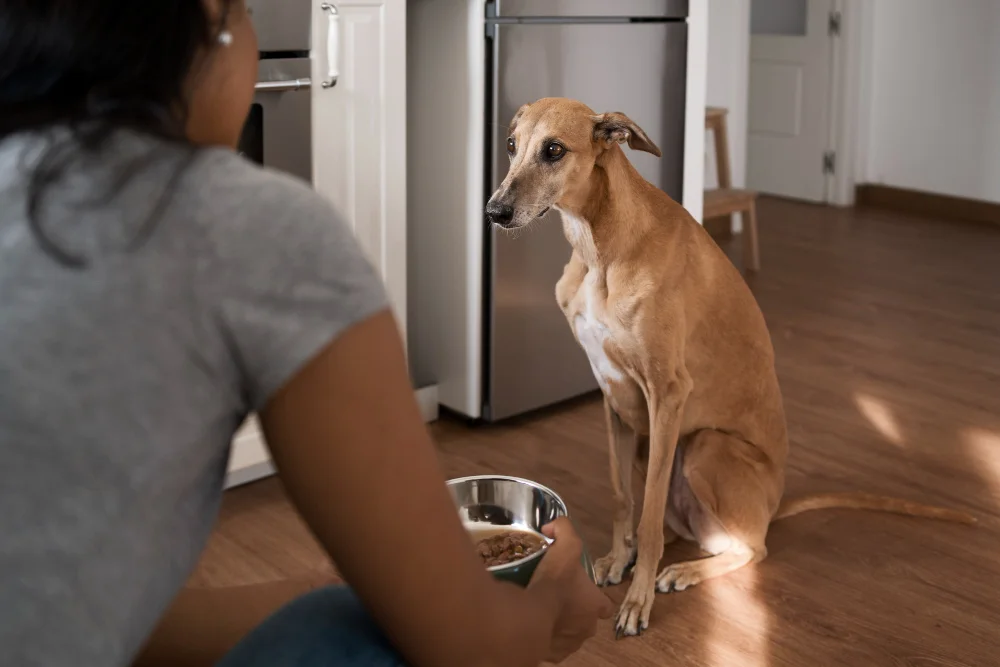
Dog loss of appetite can raise concerns about whether your dog is simply being picky or experiencing an underlying health problem. While a temporary decrease in appetite may not always be serious, it can sometimes indicate a medical condition that requires attention.
In this article, we’ll explain the common causes why your dog is not eating available treatment options.
What Causes Dog Loss of Appetite?
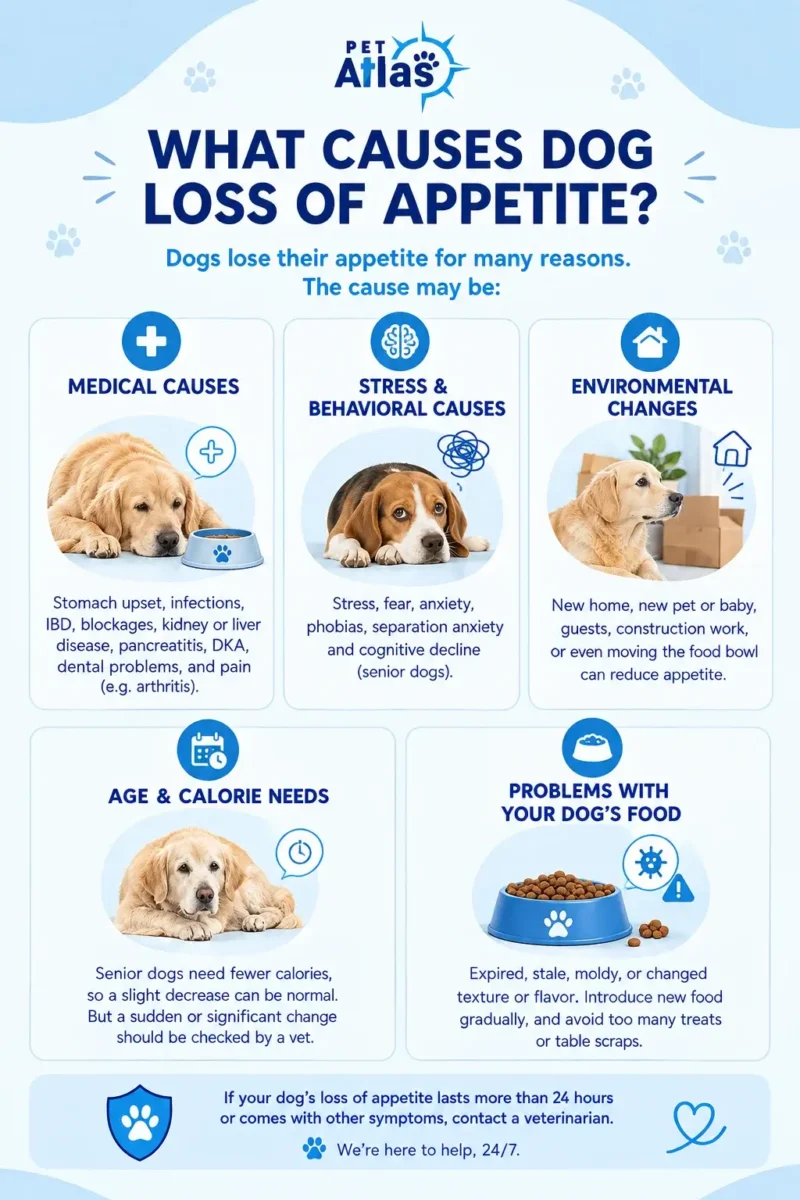
Dogs lose their appetite for many reasons. Sometimes, it may be a temporary change, while in other cases, it can indicate an underlying health problem.
The cause may be:
Medical Causes
Several health problems can cause a dog to lose its appetite. These include stomach upset, constipation, inflammatory bowel disease (IBD), infections, and digestive blockages caused by foreign objects.
More serious conditions, such as kidney or liver disease, pancreatitis, and diabetic ketoacidosis (DKA), may also affect appetite.
Dental problems, including broken teeth or gum infections, can make eating painful.
Pain from conditions such as arthritis or hip dysplasia may also make it uncomfortable for a dog to reach its food bowl.
Stress and Behavioral Causes
Stress, fear, anxiety, and phobias can cause some dogs to eat less or refuse food. Separation anxiety and cognitive decline in senior dogs may also affect eating habits.
Environmental Changes
Changes in your dog’s surroundings can affect its appetite. Moving to a new home, getting a new pet or baby, having guests, construction work, or even moving the food bowl may cause stress and reduce food intake.
Age and Calorie Needs
Senior dogs generally need fewer calories, so a slight decrease in appetite can be normal.
However, a sudden or significant change in appetite should not simply be attributed to age and should be discussed with a veterinarian.
Problems With Your Dog’s Food
Your dog may also refuse food if it is expired, stale, moldy, or has changed in texture or flavor. When changing your dog’s diet, introduce the new food gradually. Also, too many treats or table scraps can reduce interest in regular meals.
When Is Dog Loss of Appetite Dangerous?
A temporary decrease in appetite is not always a cause for concern. However, dog loss of appetite can sometimes be a sign of an underlying problem, especially when it occurs alongside other symptoms.
Watch your dog closely if appetite loss is accompanied by any of the following:
- Vomiting or diarrhea, particularly if it continues or your dog cannot keep water down.
- Blood or mucus in the stool.
- A swollen or bloated abdomen.
- Pale or dry gums.
- Signs of nausea, such as excessive drooling, frequent lip licking, or eating grass.
- Lethargy, weakness, or unusual tiredness.
- Bad breath, red gums, or swelling around the mouth.
- Unexplained weight loss.
How to Help Your Dog Eat Again
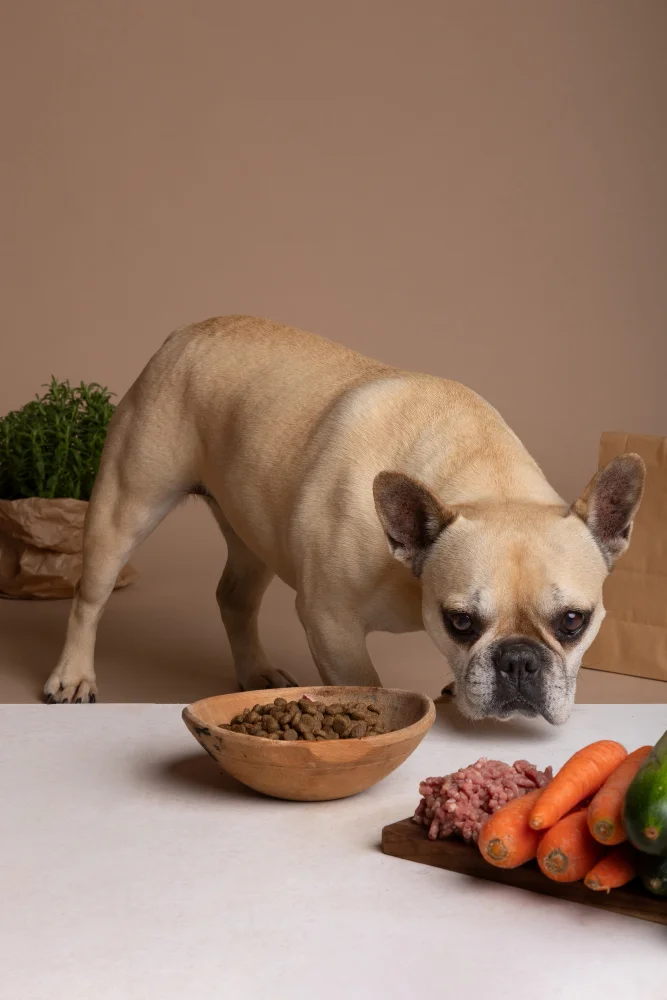
If your dog is otherwise healthy, try these simple tips:
- Warm the food slightly.
- Try a different flavor or texture.
- Add a small amount of a suitable food topper.
- Reduce treats between meals.
- Feed your dog at consistent times.
- Provide a quiet, comfortable place to eat.
- Try hand-feeding if needed.
If your dog continues to refuse food or develops other symptoms
When Should You Call a Vet for Dog Loss of Appetite?
Contact a veterinarian through Pet-Atlas if:
- Your dog refuses food for more than 24–48 hours.
- Your dog has a chronic condition such as diabetes.
- Loss of appetite occurs with vomiting or diarrhea.
- Your dog is drinking unusually large amounts of water.
- Your dog shows weakness, lethargy, or other unusual symptoms.
- Puppies with vomiting and diarrhea need prompt veterinary evaluation due to the risk of serious infections such as parvovirus.
Conclusion
If you notice dog loss of appetite, monitor your dog closely and watch for any unusual symptoms. While a temporary change in appetite may have a simple cause, it should not be ignored. A study of 3,864 dogs found that 13.1% of sick dogs experienced loss of appetite, with inappropriate food intake being one of the most common identified causes. If your dog continues to refuse food or develops other concerning symptoms, contact a Pet-Atlas veterinarian for professional guidance and appropriate care.