


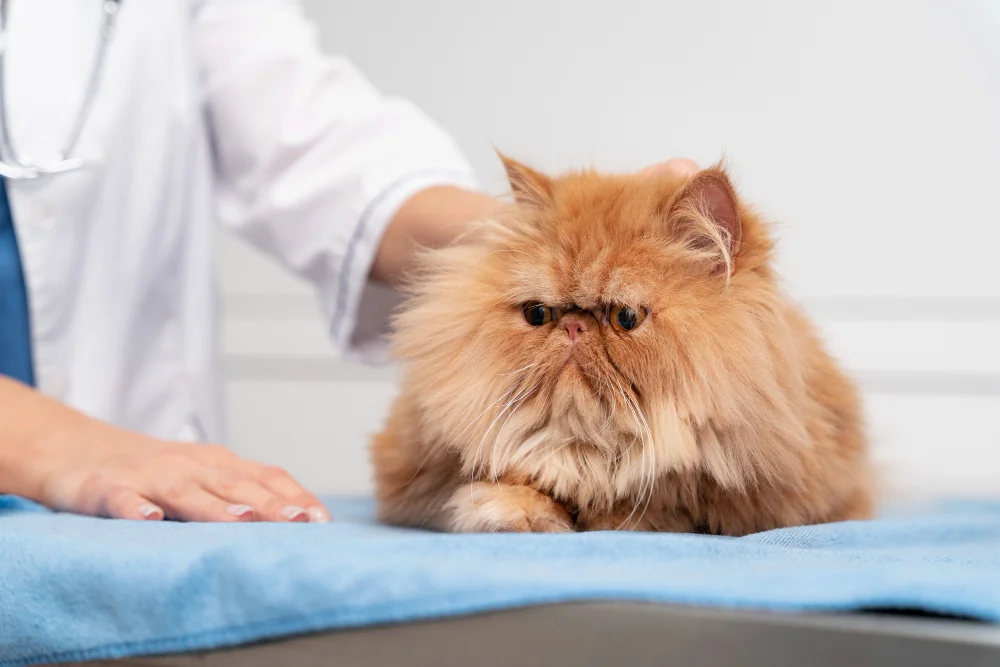
Cat diarrhea can be more than just an unpleasant surprise in the litter box. While occasional loose stools may result from a simple dietary change, diarrhea can sometimes signal parasites, infections, food sensitivities, or an underlying health condition.
Types of Cat Diarrhea
diarrhea in cats can vary in color, duration, consistency, and frequency, providing valuable clues about its possible cause and helping veterinarians determine the appropriate treatment.
Cat Diarrhea Based on Color
The color of a cat’s stool can sometimes provide clues about where a digestive problem may be occurring.
Red or Bloody Diarrhea
Blood in a cat’s diarrhea should not be ignored, especially if it is severe, persistent, or accompanied by other symptoms.
- Black or tarry stools: May indicate digested blood from bleeding in the stomach or small intestine.
- Bright red blood: Often suggests bleeding or inflammation in the lower digestive tract, such as the colon or rectum.
- Mucus-covered stool: May occur with inflammation or irritation of the colon and can be associated with parasites or other intestinal conditions.
Yellow or Green Diarrhea
Green diarrhea: may occur after eating grass or certain foods and is not always a sign of illness. However, persistent green stool, especially when accompanied by vomiting, lethargy, or loss of appetite, may require veterinary attention.
Yellow diarrhea: can sometimes be associated with rapid intestinal transit or digestive disturbances. In some cases, particularly when accompanied by other signs of illness, it may be linked to liver or gallbladder problems.
Cat Diarrhea Based on Duration
The duration of diarrhea can help distinguish between short-term digestive upset and more persistent conditions.
Acute Diarrhea
Acute diarrhea develops suddenly and typically lasts for less than two weeks. It may be caused by dietary changes, stress, infections, parasites, or other temporary digestive disturbances.
Chronic Diarrhea
Chronic diarrhea persists for two to three weeks or longer or repeatedly returns over time. It may be associated with food intolerance, chronic intestinal disease, parasites, or other underlying health conditions.
Cat Diarrhea Based on Appearance
The volume, frequency, and appearance of diarrhea can also provide clues about which part of the digestive tract may be affected.
Small Bowel Diarrhea
Small bowel diarrhea typically produces larger volumes of stool and may occur less frequently. Weight loss may also develop if the condition persists.
Large Bowel Diarrhea
Large bowel diarrhea is often characterized by frequent, smaller stools. The stool may contain mucus or fresh red blood, and cats may strain while defecating
Causes of Cat Diarrhea
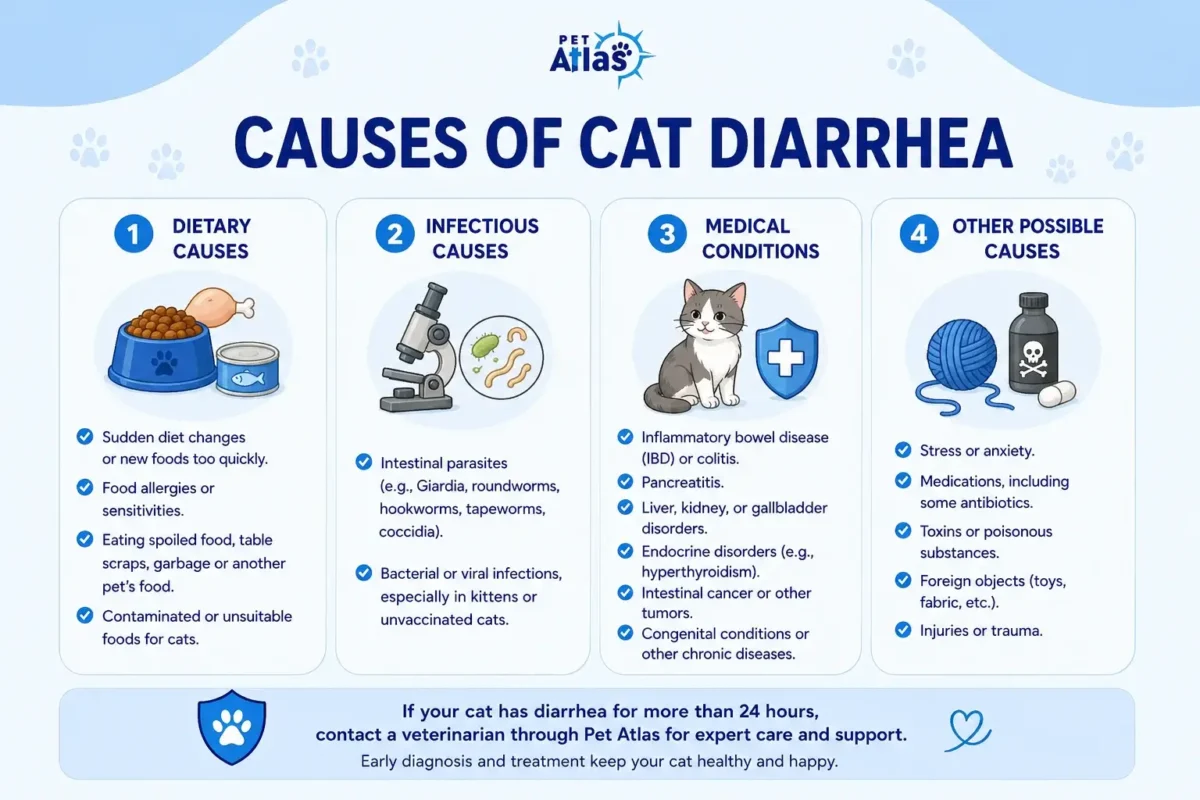
diarrhea in cats can have many causes, ranging from mild digestive upset to underlying medical conditions. The most common causes include:
Dietary Causes
- Sudden diet changes or introducing new foods too quickly.
- Food allergies or sensitivities to certain ingredients.
- Eating spoiled food, table scraps, garbage, or another pet’s food.
- Certain treats or foods that are contaminated or unsuitable for cats.
Infectious Causes
- Intestinal parasites, such as Giardia, roundworms, hookworms, tapeworms, and coccidia.
- Bacterial or viral infections, particularly in kittens or unvaccinated cats.
Medical Conditions
- Inflammatory bowel disease (IBD) or colitis.
- Pancreatitis.
- Liver, kidney, or gallbladder disorders.
- Endocrine disorders, such as hyperthyroidism.
- Intestinal cancer or other tumors.
- Congenital conditions or other chronic diseases.
Other Possible Causes
- Stress or anxiety.
- Medications, including some antibiotics.
- Toxins or poisonous substances.
- Foreign objects, such as toys, fabric, or other indigestible items.
- Injuries or trauma.
How to Stop Cat Diarrhea Fast?
To stop your cat’s diarrhea quickly and safely, you first need an accurate diagnosis of its underlying cause.
When Should You See a Vet for Cat Diarrhea
Mild diarrhea may resolve within 24–48 hours, but veterinary care is recommended if:
- Diarrhea persists or worsens.
- Your cat has vomiting, lethargy, or loss of appetite.
- There is blood or black, tarry stool.
- Your cat is a kitten, senior, or has an existing health condition.
- Diarrhea is severe or recurrent.
Conclusion
Don’t ignore cat diarrhea. While mild diarrhea may sometimes be temporary, persistent or recurrent episodes can indicate an underlying health problem that requires veterinary attention. In fact, a study of cats in rehoming shelters found that 11.9% had diarrhea, highlighting how common this digestive problem can be