



Have you noticed something unusual in your dog’s stool or unexplained weight loss despite a normal appetite? Worms in dogs can be difficult to detect because some infected dogs show few or no symptoms.
However, certain parasites can cause serious health problems and may even spread to people.
In this guide, you’ll learn about the most common types of worms , their symptoms, causes, transmission, treatment, and prevention.
What are worms in dogs?
Worms in dogs are parasitic organisms that can live inside different parts of a dog’s body, with the intestines being the most common location.
Dogs may become infected by coming into contact with contaminated soil or feces, swallowing infected fleas, or interacting with infected animals.
Roundworms, hookworms, and whipworms are some of the most common intestinal worms found in dogs.
Where do worms come from in dogs?
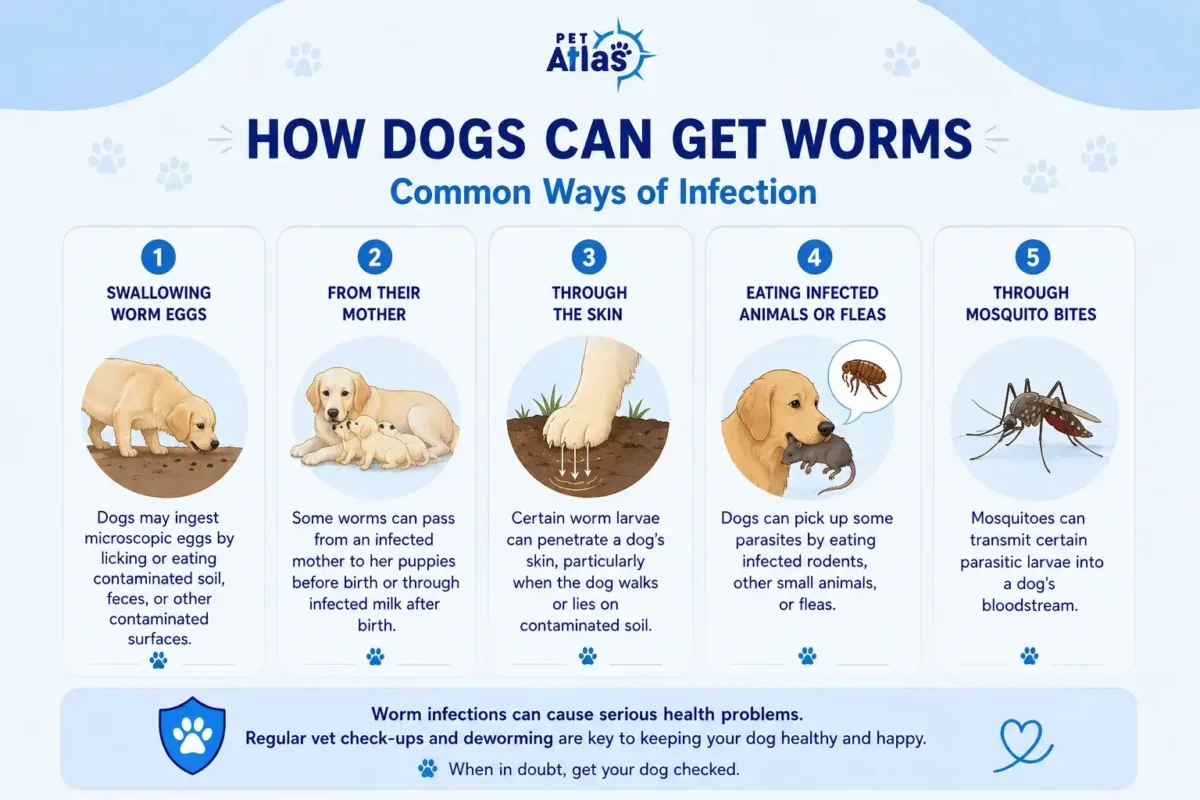
Dogs can become infected with worms through several routes, and the exact method depends on the type of parasite.
Here are the most common ways dogs can become infected:
Swallowing worm eggs
Dogs may ingest microscopic eggs by licking or eating contaminated soil, feces, or other contaminated surfaces.
From their mother
Some worms can pass from an infected mother to her puppies before birth or through infected milk after birth.
Through the skin
Certain worm larvae can penetrate a dog’s skin, particularly when the dog walks or lies on contaminated soil.
Eating infected animals or fleas
Dogs can pick up some parasites by eating infected rodents, other small animals, or fleas.
Through mosquito bites
Mosquitoes can transmit certain parasitic larvae into a dog’s bloodstream.
What are the signs of worms in dogs?
Worms in dogs can cause few or no noticeable symptoms, but some dogs may develop digestive problems or more obvious signs.
Common signs include:
- Visible worms or segments in stool or vomit
- Diarrhea, sometimes with blood
- Weight loss despite increased appetite
- Bloated or pot-bellied abdomen
- Weakness, lethargy, or reduced exercise tolerance
- Vomiting
- Poor growth in puppies
- Scooting or excessive rubbing of the rear
- Worms around the anus or on the fur
- Coughing or breathing problems with certain types of worms
- Anemia in severe infections
Types of worms in dogs
Learn about the different types and forms of worms in dogs and how they are transmitted through the following table.
| Type | What They Look Like | How they are transmitted | Facts |
| Roundworms | Long, round, cream-colored worms that may look like spaghetti | Contaminated soil or feces, also can pass from mother to puppies | Common in puppies: some species can infect humans |
| Hookworms | Very small, thin worms with a hook-like mouth. usually difficult to see in stool | Contaminated soil, mother’s milk, or through the skin | Feed on blood and can cause anemia |
| Whipworms | Thin worms with a thicker end, resembling a whip. rarely seen in stool | Swallowing eggs from contaminated soil or feces | Can cause diarrhea and digestive problems |
| Tapeworms | Flat, white, ribbon-like worms, segments may look like grains of rice around the anus or in stool | Eating infected fleas or prey | Often spread through fleas or infected animals |
| Heartworms | Long, thin, thread-like worms; not normally visible in stool and usually detected through veterinary testing | Bite from an infected mosquito | Can cause serious heart and lung disease if left untreated |
When should you call a vet?
If you suspect your dog may have worms, don’t wait for the symptoms to become severe. Contact your veterinarian via Pet-Atlas If you notice any of the following:
- Worms or worm segments in your dog’s stool
- Signs that could indicate a parasitic infection
- Possible exposure to contaminated soil, feces, infected animals, or fleas
Most worm infections can be treated effectively and are not considered emergencies, but early diagnosis and treatment can prevent complications and protect your dog’s health.
How to treat worms in dogs?

Treatment depends on the type of parasite and the severity of the infection. Your veterinarian may recommend a deworming medication designed to eliminate the specific worms affecting your dog. Once treated, the parasites are typically killed or paralyzed and then passed out of the body through the stool.
Common treatment options include:
- Oral dewormers: Tablets, chews, or liquid medications.
- Topical treatments: Applied directly to the skin.
- Injections: Used in certain cases and less commonly than oral or topical treatments.
Don’t choose a deworming treatment on your own, as different types of worms may require different medications.
to identify the type of worm and determine the most appropriate treatment for your dog.
How to prevent worms in dogs?
Preventing worm infections is an important part of keeping your dog healthy.
While deworming treatments help control the number of worms in the body, no treatment guarantees complete elimination of every worm.
Regular parasite prevention helps keep the worm burden low and reduces the risk of complications.
To protect your dog:
- Follow a regular deworming schedule recommended by your veterinarian.
- Deworm your dog at least every three months, or more often when their lifestyle puts them at higher risk.
- Keep your dog away from contaminated feces and soil whenever possible.
- Practice good flea control, as fleas can transmit certain worms.
- Ask your veterinarian via Pet-Atlas to recommend the most suitable parasite prevention plan for your dog.
conclusion
Worms in dogs are not uncommon. An analysis of data from 19,807 dogs found that about 24.7% were affected by intestinal parasites.
Since some dogs may carry worms without showing obvious symptoms, regular prevention and veterinary guidance are essential.
Avoid choosing deworming medications or schedules on your own.Contact the veterinarians at Pet-Atlas to create a personalized prevention plan based on your dog’s age, lifestyle, and risk factors, helping keep them protected year-round.