


Have you noticed worms in your cats’ stool, unexplained weight loss, diarrhea, or a swollen belly? These signs may indicate a parasitic infection, but not all worms in cats are visible to the naked eye, and similar symptoms can also occur with other health problems.
Learn how to recognize the common signs of worms in cats, understand the different types, and know when your cat needs veterinary evaluation.
Signs and Symptoms of Worms in Cats
Symptoms can vary depending on the type and severity of the infection. Common signs include:
- Visible worms In stool, vomit, or around the anus.
- Digestive upset such as diarrhea or vomiting.
- Weight loss even with a normal appetite.
- Swollen belly especially in kittens.
- Dry or unkempt fur.
- Pale gums may indicate anemia.
- Coughing if the lungs are affected.
- Low energy or poor condition.
- Anal itching and Excessive licking or scooting.
Important: Not seeing worms in your cat’s stool does not necessarily mean your cat is free of parasites.
Types of Worms in Cats and Appearance
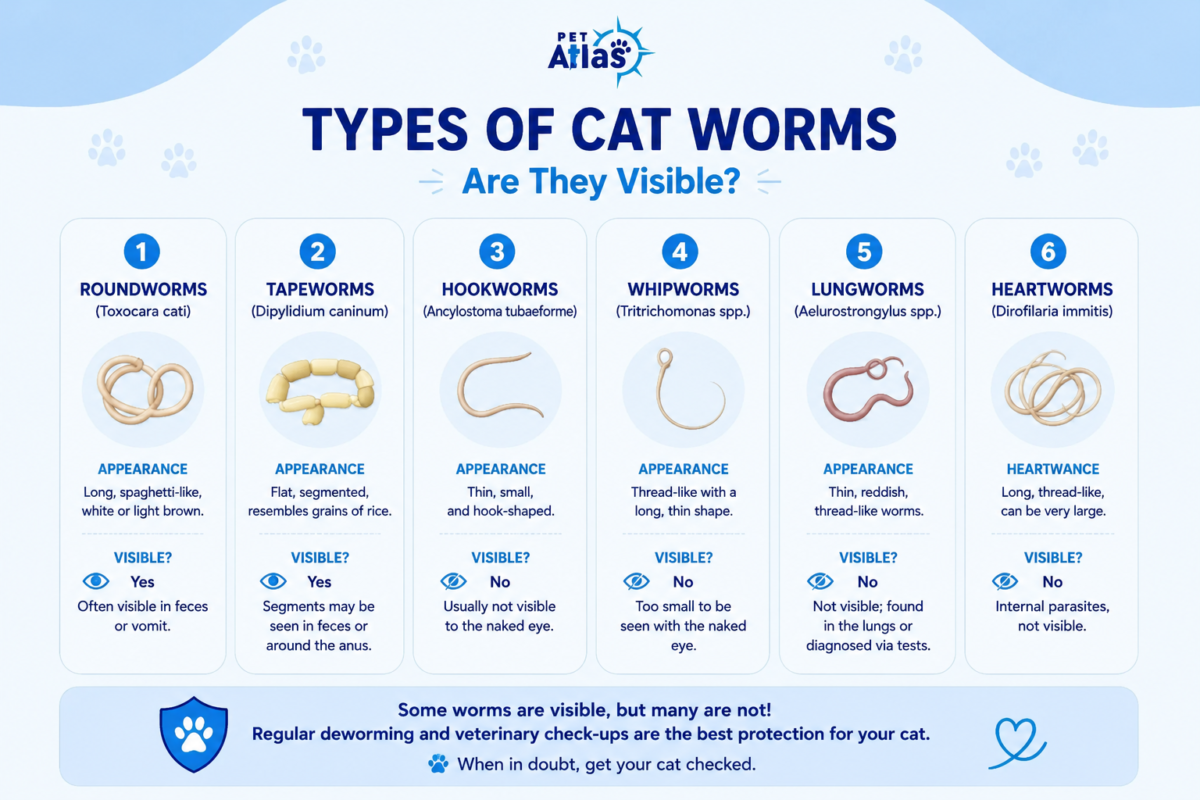
Cats can be infected with several types of worms. The most common include:
| Type of Worm | Appearance & Transmission | Common Signs |
| Roundworms | Long, spaghetti-like worms. Common in kittens and may be seen in stool or vomit. | Digestive problems Poor growth Swollen belly |
| Tapeworms | Flat, ribbon-like worms.Their segments may look like grains of rice around the anus or in the stool. Often transmitted through infected fleas or rodents. | Itching around the anus. Digestive upset. Weight loss. |
| Hookworms | Tiny worms that attach to the intestinal wall and feed on blood. | Anemia Weakness Intestinal bleeding |
| Whipworms | Thin, whip-shaped worms. Less common in cats and usually detected through a stool examination. | Weight loss Digestive problems Bloody diarrhea |
| Heartworms | Transmitted through infected mosquitoes and can affect the heart and lungs. | Coughing Breathing difficulties |
| Lungworms | Parasites that live in the lungs. Cats may become infected by eating infected prey. | Coughing Breathing difficulties Respiratory problems |
How Do Cats Get Worms?
Cats can become infected with worms in several ways, depending on the type of parasite:
- From their mother: Kittens can contract some intestinal worms while nursing.
- By ingesting eggs or larvae: Cats may swallow parasites from contaminated fur, paws, soil, or feces.
- By eating infected prey: Infected birds, rodents, reptiles, or insects can transmit certain worms.
- Through fleas: Swallowing infected fleas during grooming can cause tapeworm infection.
- Through the skin: Hookworm larvae can enter through the skin, especially the paws.
- From contaminated environments: Outdoor cats have a higher risk of exposure to worm eggs and larvae.
Treatment of Worms in Cats
Not every deworming medication is right for every cat. The appropriate treatment depends on the type of parasite, your cat’s weight, overall health, and the presence of other parasites such as fleas.
Giving your cat a dewormer without proper diagnosis may not treat the actual cause, and could delay the care your cat needs.
Don’t guess the treatment. Get the right diagnosis first.
Get expert guidance on the appropriate treatment for your cat.
How to Prevent Worms in Cats
Preventing worms requires consistent parasite control and good hygiene. Key measures include:
- Regular deworming: Follow a veterinarian-recommended schedule based on your cat’s age and lifestyle.
- Year-round parasite prevention: Use regular flea and parasite control to reduce the risk of infections such as tapeworms.
- Clean the litter box: Remove feces daily and clean the litter box regularly to reduce parasite transmission.
- Limit hunting: Prevent cats from eating rodents, birds, or other prey that may carry parasites.
- Regular stool tests: Periodic fecal examinations can help detect infections early, especially in kittens, newly adopted cats, and outdoor cats.
- Practice good hygiene: Remove feces promptly, wash your hands after cleaning the litter box, and use gloves when possible to reduce the risk of parasites spreading to people or other pets.
Conclusion
Not seeing worms doesn’t mean your cat is worm-free. Even indoor cats can develop worms, as they may still be exposed to parasites despite staying indoors. A study found that indoor-only cats can develop parasitic infections, although their risk is lower than that of cats with outdoor access.
Some worms are invisible and may cause few or no symptoms. If you suspect worms in cats, consult a veterinarian via Pet- Atlas for proper diagnosis and treatment.
FAQs
How do indoor cats get worms in Dubai?
Indoor cats in Dubai can get worms through infected fleas, contaminated shoes or surfaces, other animals, mother-to-kitten transmission, or eating infected insects and prey.
Can cat worms spread to humans?
Yes. Some intestinal worms in cats can spread to humans, especially through contact with contaminated feces or soil. Children are at higher risk of exposure.
To reduce the risk:
Wash your hands after handling the litter box.
Clean the litter box regularly.
Control fleas to reduce parasite transmission.
Follow your veterinarian’s parasite prevention plan.